Why Not Get a Bernese or a Poodle?
What a Bernese-Poodle Cross Actually Gives You
What the Bernese Mountain Dog Brings
The Bernese Mountain Dog is one of the most beloved large breeds in the world, and for good reason. They are calm, loyal, deeply affectionate, and stunningly beautiful. Their temperament is legendary: patient with children, gentle with other animals, and utterly devoted to their families. They carry a presence that few other breeds can match: heavy bone, a broad chest, a thick tri-color coat, and soulful dark eyes.
But the Bernese also carries significant health challenges. Their average lifespan is just 6 to 8 years, heartbreakingly short for a dog that bonds so deeply. Cancer rates, particularly histiocytic sarcoma, are alarmingly high in the breed. They shed heavily year-round, making them difficult for families with allergies. And their heavy coat makes them sensitive to heat, limiting where they can comfortably live.
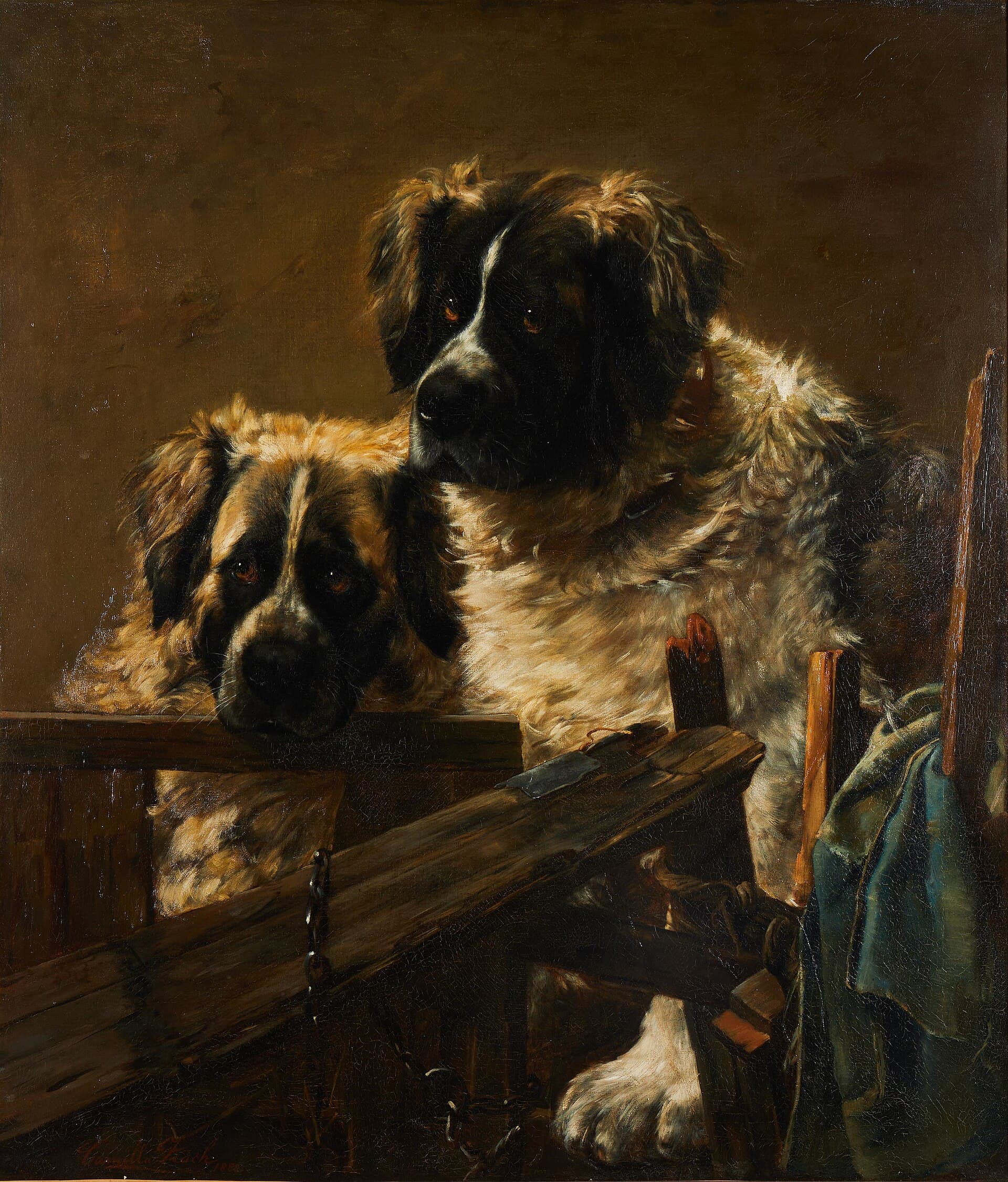
Camilla Zach-Dorn, Zwei Berner Sennhunde, 1888. Oil on canvas. Public domain, via Wikimedia Commons.
What the Poodle Brings
The Poodle is one of the healthiest, longest-lived, and most intelligent dog breeds. Standard Poodles routinely live 12 to 15 years. They carry the genetics for a non-shedding coat, making them accessible to allergy sufferers. They are athletic, eager to learn, and remarkably versatile, excelling in everything from obedience to therapy work.
But the Poodle's strengths come with trade-offs. Their energy can be intense for families looking for a calmer companion. Their frame is lean and narrow compared to the substantial presence of a Bernese. Their coat, while non-shedding, requires significant professional grooming. And temperamentally, some Poodle lines carry a sensitivity or anxiousness that doesn't suit every household.
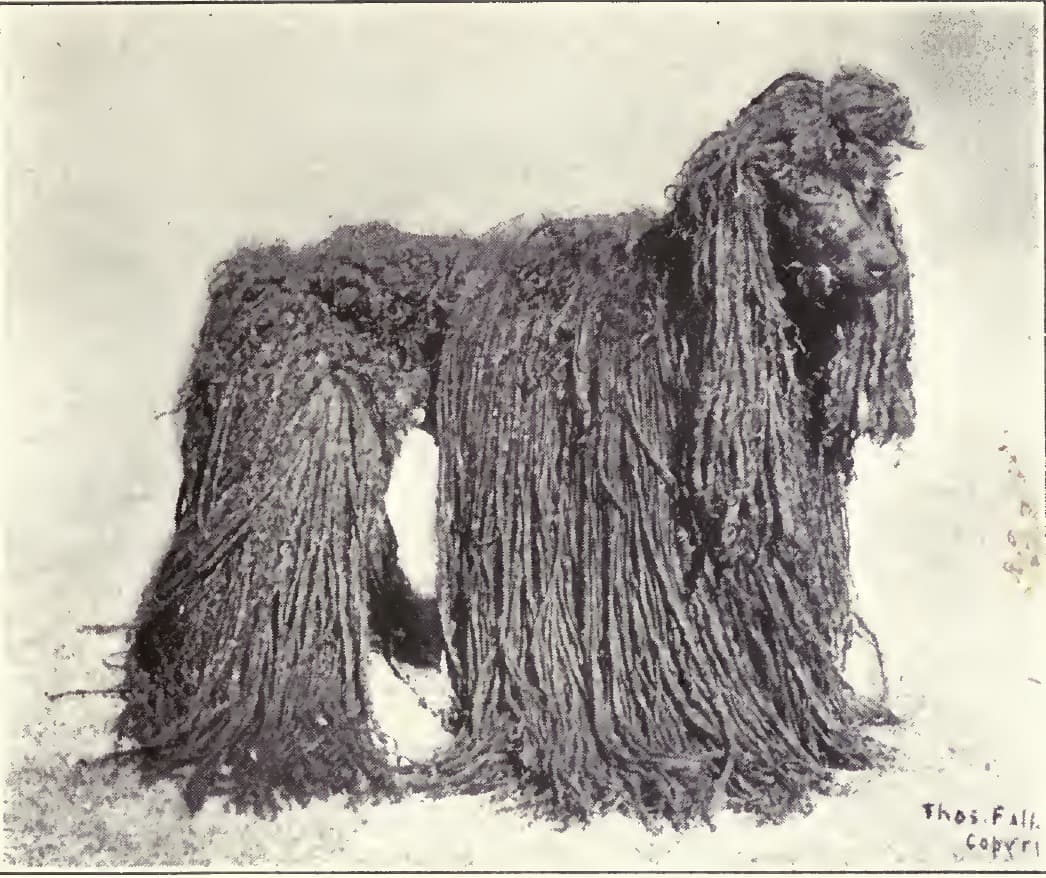
Corded Poodle, 1915. From W.E. Mason, Dogs of All Nations. Photo: Thos. Fall. Public domain; digitized by the Internet Archive.
What the Cross Achieves
The Bernedoodle, when bred intentionally, takes the best of both breeds and addresses their most significant limitations. From the Bernese comes the calm temperament, the blocky structure, and the deep loyalty. From the Poodle comes longevity, reduced cancer risk through genetic diversity, non-shedding coat genetics, and trainability.
This isn't a random mix hoping for the best. Intentional Bernedoodle breeding uses genetic testing to confirm coat type, shedding status, and disease markers before a pairing ever happens. The result is a dog designed for modern family life, one that can live in a wider range of climates, homes, and situations than either parent breed alone.
It is important to be clear: a Bernedoodle is not automatically 'better' than a purebred Bernese or Poodle. Each is a wonderful dog. The Bernedoodle simply offers a different combination of traits that many families find ideal for their specific needs, particularly longer lifespan, reduced shedding, and a temperament that blends calm confidence with eager intelligence.
What It Does Not Automatically Achieve
Simply crossing a Bernese and a Poodle does not guarantee a healthy, low-shedding, well-tempered dog. Without genetic testing, a Bernedoodle puppy might shed heavily, carry inherited diseases from both parent breeds, or have a temperament that skews too far toward one parent.
This is why the breeder matters as much as the breed. An untested cross is a gamble. A carefully planned, genetically verified pairing is an informed decision. The difference between a well-bred Bernedoodle and a poorly bred one is not luck. It is knowledge, testing, and intentionality.
Why did you choose this specific pairing? What does each parent contribute to the litter? Can you share the genetic testing results for both parents?
Related Articles
Explore more from our knowledge base