Designing Dogs for Modern Life
The Philosophy Behind Intentional Crossbreeding
All Breeds Are Designed
The Bernese Mountain Dog was purpose-bred for Swiss farms: hauling carts, guarding livestock, and enduring alpine winters. The Poodle was bred for water retrieval in Germany and France, selected for intelligence, athleticism, and a water-resistant coat. Neither breed appeared by accident. Both are the product of centuries of human selection for specific traits.
Modern crossbreeding programs like the Bernedoodle continue this tradition with a critical advantage: genetic testing technology that did not exist even twenty years ago. Today's breeders can see the genome before making a pairing decision. They can confirm furnishings status, identify disease carriers, predict coat type, and estimate size, all before a breeding takes place.
Why Modern Families Need Different Dogs
The world dogs live in has changed dramatically. Most families live in cities or suburbs, not on farms. Many household members have allergies. Dogs are expected to be calm in apartments, good with children, comfortable in dog-friendly offices, and adaptable to travel. They serve as emotional support animals, therapy partners, and service dogs, roles that demand specific temperament traits.
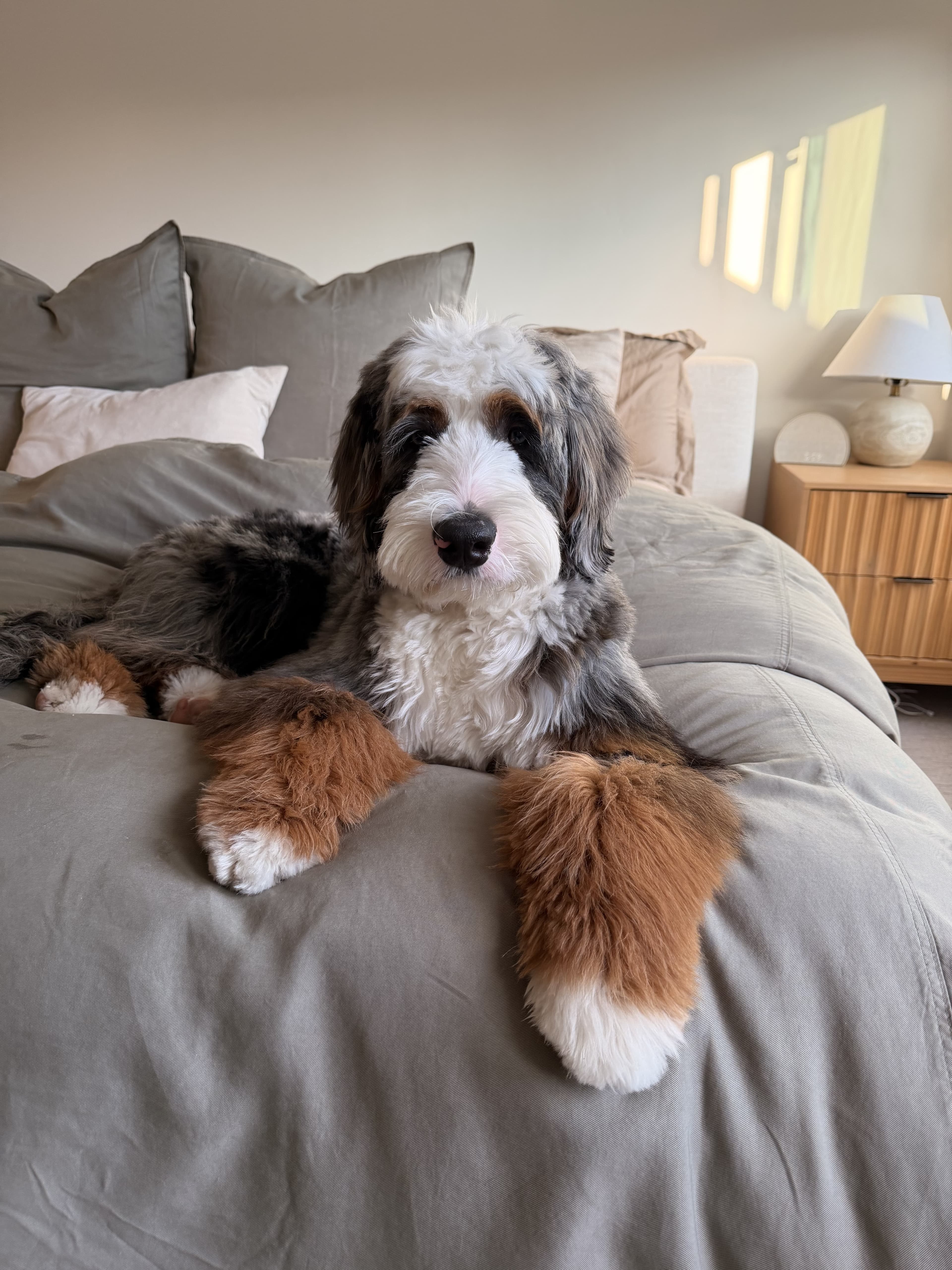
No single existing breed checks every box for modern life. The Bernedoodle was developed to fill that gap, combining the calm, loyal, substantial presence of the Bernese with the Poodle's longevity, intelligence, and non-shedding coat. It is a dog designed for the way people actually live today.
Intentional Breeding vs. Random Crossing
There is a meaningful difference between a 'designer dog' produced for marketing appeal and an intentionally bred crossbreed backed by genetic data. The former is a label on a puppy for sale. The latter is a breeding program with health testing, lineage tracking, temperament evaluation, and generational goals.
The common claim that 'mutts are healthier' contains a kernel of truth: genetic diversity can reduce the incidence of breed-specific diseases. But random breeding does not guarantee diversity, and it does not prevent new problems from emerging. Intentional crossbreeding with testing is the only approach that reliably captures the benefits of genetic diversity while screening out inherited risks.
The Ethical Framework
Responsible breeding, whether purebred or crossbreed, operates under a simple principle: every generation should be healthier, more temperamentally sound, and better suited to its role than the last. This requires testing, data, transparency, and a willingness to make difficult decisions when a dog does not meet the standard for breeding.
The Bernedoodle community is still young. Standards are being established. Best practices are being defined. Organizations like the Bernedoodle Kennel Club exist to accelerate this process, providing frameworks, accountability, and education so that the breed develops on a foundation of science rather than speculation.
Related Articles
Explore more from our knowledge base