Understanding Bernedoodle Genetics
What to know before you buy, and what to ask your breeder
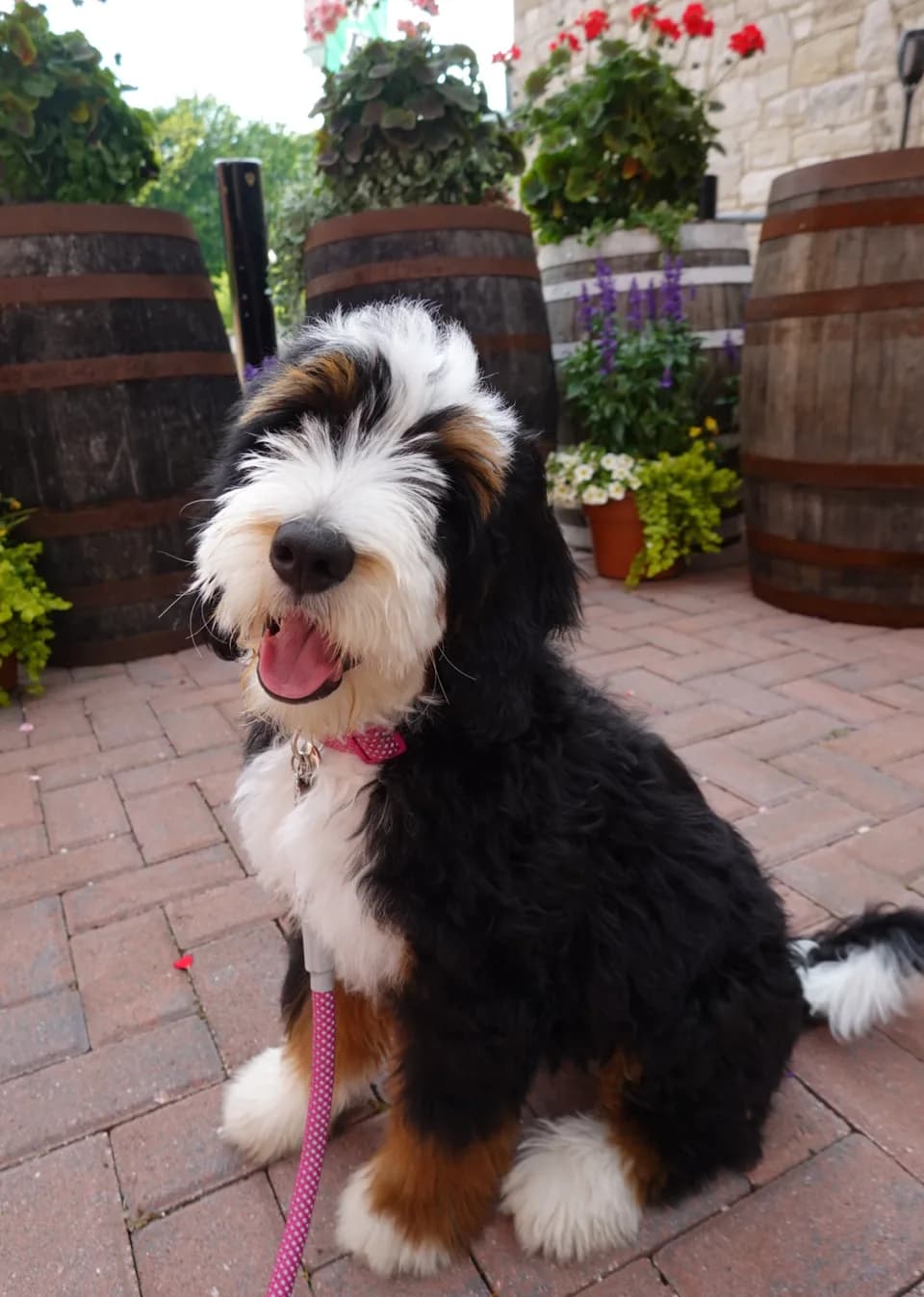
Choosing a Bernedoodle is one of the most exciting decisions a family can make. Understanding the basics of genetics and health testing empowers you to ask the right questions, choose a responsible breeder, and find the puppy that is the best fit for your home. This page is designed to give you that knowledge. No science degree required.
Do Bernedoodles Shed? How Can I Tell if a Puppy Will Shed?
This is the number one question from families considering a Bernedoodle, and the answer comes down to a single gene, not breed percentage.
Shedding in Bernedoodles is controlled by the furnishings gene, known as RSPO2. This gene determines whether a dog develops the longer facial hair (beard, eyebrows, mustache) associated with low-shedding coats. It has nothing to do with how much Poodle or Bernese Mountain Dog is in the mix.
There are three possible results: FF (two copies, lowest shedding), Ff (one copy, low shedding), and ff (no copies, sheds like a purebred Bernese). A simple DNA test can tell you exactly which result a puppy carries before you bring them home.
Do you know the furnishings gene of both parents? Make sure that at least one parent has two copies of the furnishings gene (FF) to ensure that all puppies will carry at least one copy. DNA testing on both parents is ideal.
Does My Breeder Genetically Test Their Dogs? What Should They Be Testing For?
Genetic testing is one of the most powerful tools a breeder has, but not all testing is equal. Here's what to look for and what the results actually mean.
A responsible breeder should be running a comprehensive DNA panel on every breeding dog, or have reliable knowledge of their genetics through documented parentage. This typically covers disease markers like Degenerative Myelopathy (DM), Von Willebrand's Disease (vWD), Progressive Retinal Atrophy (PRA), and many others specific to the Bernese Mountain Dog and Poodle gene pools.
Genetic testing can tell you whether a puppy is a carrier, at risk, or clear for specific inherited conditions. It can confirm coat type, color genetics, furnishings status, and even size predictions. What it cannot tell you is everything: temperament, structure, and overall health are also shaped by environment, nutrition, socialization, and the breeder's experience.
While having completely clear parents on both sides is ideal, maintaining genetic diversity is crucial to the long-term health of any population of dogs. Slowly working away from disease markers is the goal, but that is a process, not an overnight fix. Breeding a carrier to a clear partner is a reasonable and responsible approach for breeders who are thinking about the long-term health and longevity of their pedigrees, not just the next litter.
Beyond DNA panels, look for breeders who also perform physical health evaluations: hip and elbow scoring (OFA or PennHIP), cardiac clearances from a board-certified cardiologist, and ophthalmologist exams. The combination of genetic testing and physical health evaluations gives the most complete picture.
Ask your breeder: What DNA panel do you use? Can I see the health clearances for both parents? Do you test each puppy individually, or do you test the parents and know what we should expect?
What Type of Coat Will My Bernedoodle Have?
Bernedoodle coats vary widely, from loose and wavy to tight and curly. Understanding the genetics behind coat type helps you know what to expect.
Coat texture in Bernedoodles is influenced by the KRT71 gene (the curl gene). Dogs can carry two copies for a curlier coat, one copy for a wavy coat, or no copies for a straighter coat. Most Bernedoodles fall somewhere in the wavy to loosely curly range, with a soft, plush texture that families love.
Coat type affects grooming needs. Curlier coats tend to trap more debris and require more frequent brushing and professional grooming, while straighter or wavy coats may be lower maintenance. It is important to understand that coat texture and shedding are controlled by completely separate genes: a straight-coated Bernedoodle with confirmed furnishings (FF) will shed just as little as a curly-coated one. Your breeder should be able to tell you both the curl gene status and the furnishings status of a puppy, and give you an indication of what possibilities there are from these parents.
Color and pattern are determined by separate genetics entirely. The classic tri-color (black, white, and rust) is the hallmark Bernedoodle look, but these dogs can also come in phantom, merle, sable, parti, and solid variations. A breeder who understands color genetics can give you a good prediction of what a puppy's adult coat will look like.
Ask your breeder: What is this puppy's curl gene status? What coat type do you expect based on the parents? How often will this coat type need professional grooming?
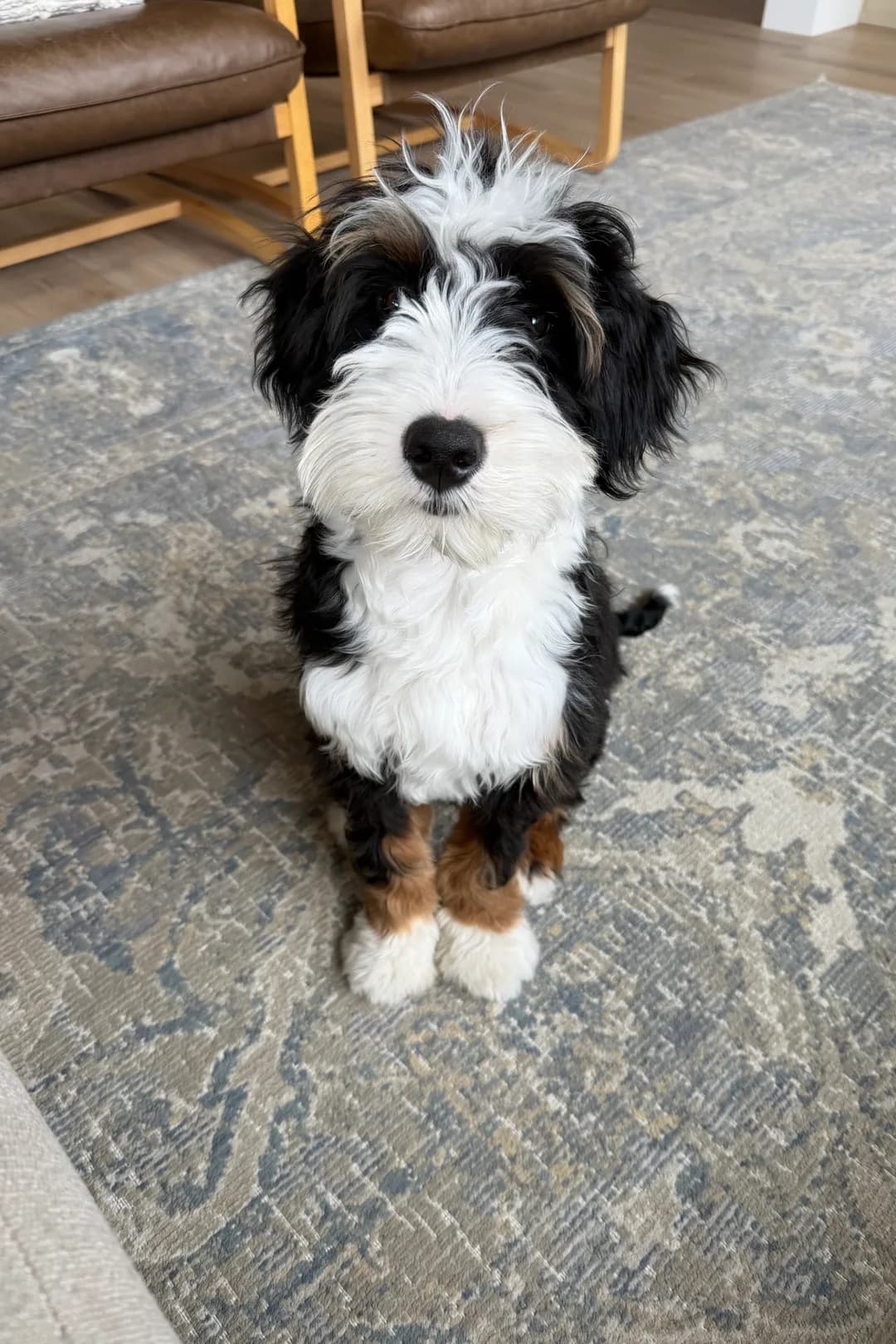
What Health Issues Are Bernedoodles Prone To? How Are Breeders Reducing Risk?
One of the greatest advantages of the Bernedoodle is improved health through genetic diversity, but responsible breeding practices are what make that advantage real.
Bernese Mountain Dogs are known to have shorter life spans and higher rates of certain cancers, particularly histiocytic sarcoma. By crossing with Poodles, Bernedoodles benefit from hybrid vigor: the increased genetic diversity that comes from combining two distinct gene pools. This can reduce the incidence of breed-specific conditions found in either parent breed.
However, hybrid vigor is not automatic. It requires intentional breeding with health-tested dogs and careful tracking of outcomes across generations. Responsible breeders maintain health records going back multiple generations, tracking what conditions have appeared, which lines produce the greatest longevity, and where orthopedic and cardiac strengths lie.
Key health screenings to look for include: hip and elbow evaluations (OFA or PennHIP), cardiac clearances, ophthalmologist exams, and comprehensive DNA panels covering conditions like DM, vWD, PRA, and Neonatal Encephalopathy. Every breeding dog should have these clearances completed before producing a litter.
Ask your breeder: What health clearances do both parents have? Can I see their OFA results? Do you track health outcomes across generations? What is the average life span you're seeing in your lines?
How Big Will My Bernedoodle Get? Can Genetics Predict Adult Size?
Size is one of the most common concerns for families choosing a Bernedoodle, especially those in apartments, condos, or with young children.
Bernedoodle size is influenced by the size of both parents and, in multigenerational lines, the documented size history of the lineage. Bernedoodles come in six sizes: Micro Mini (under 20 lbs), Petite Mini (20–30 lbs), Mini (30–50 lbs), Medium (40–60 lbs), Standard (60–90 lbs), and Standard XL (90+ lbs). The Munchkin is a type rather than a standardized size; most Munchkins weigh 10 to 25 lbs. A breeder with multigenerational data can give you a much more accurate size prediction than one working with first-generation crosses.
Genetic testing can also provide size-related insights. Some DNA panels include markers associated with body size that can help predict whether a puppy will land at the smaller or larger end of the expected range. However, nutrition, exercise, and spay/neuter timing also play a role in a dog's final size.
Smaller Bernedoodles are not simply scaled-down versions of larger ones. Miniaturization is typically achieved through Miniature or Toy Poodle lines, and responsible breeders ensure that reducing size does not compromise structure, temperament, or health. Smaller dogs also tend to have longer life spans, which is an added benefit for families looking for a long-term companion.
Ask your breeder: What are the sizes of both parents and grandparents? What size range do you expect for this litter? Do you have data from previous litters showing adult sizes?