Merle in Bernedoodles
Beautiful, legitimate, and non-negotiably safe: what the merle gene means for the breed
Why People Love Merle
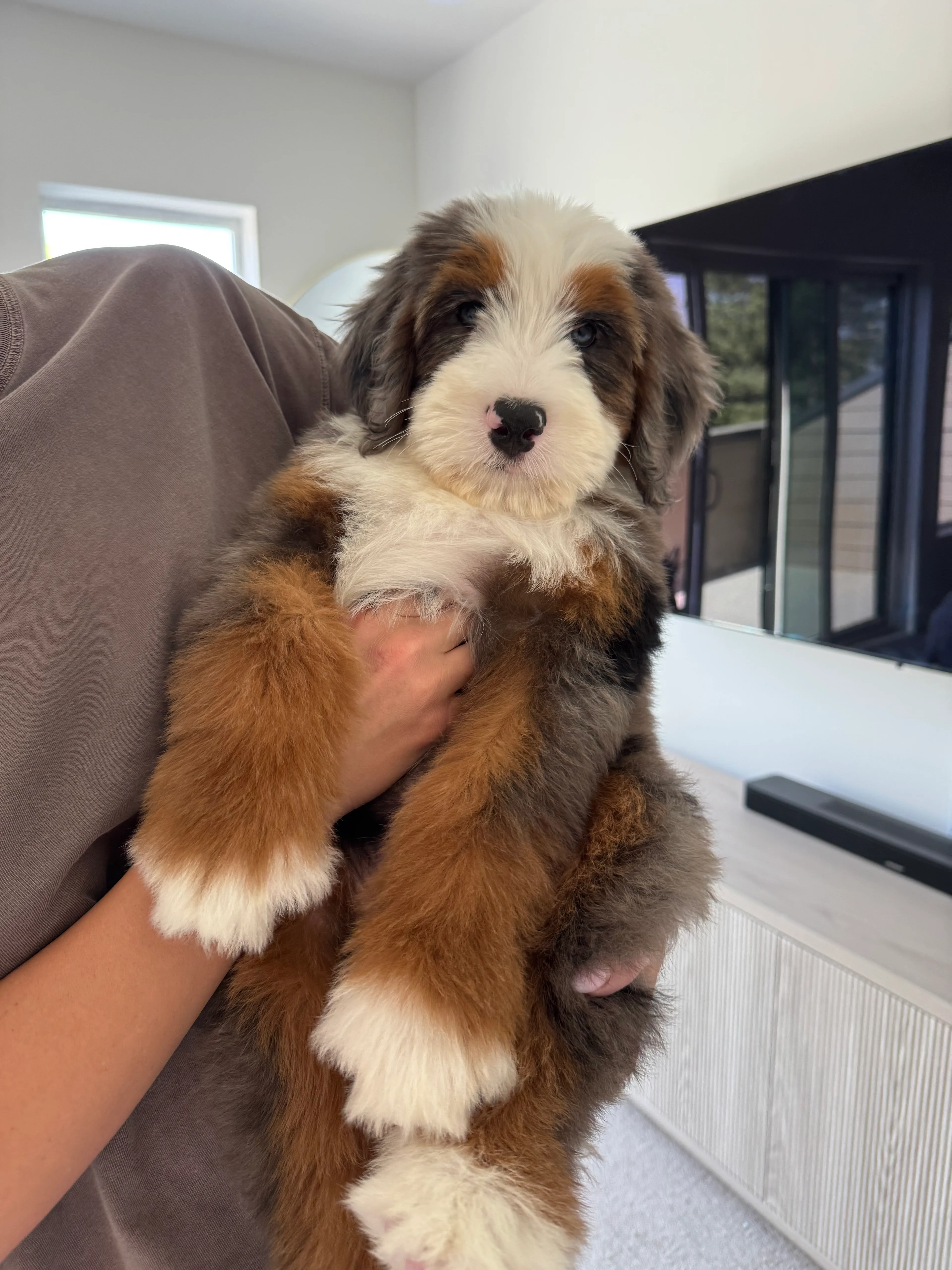
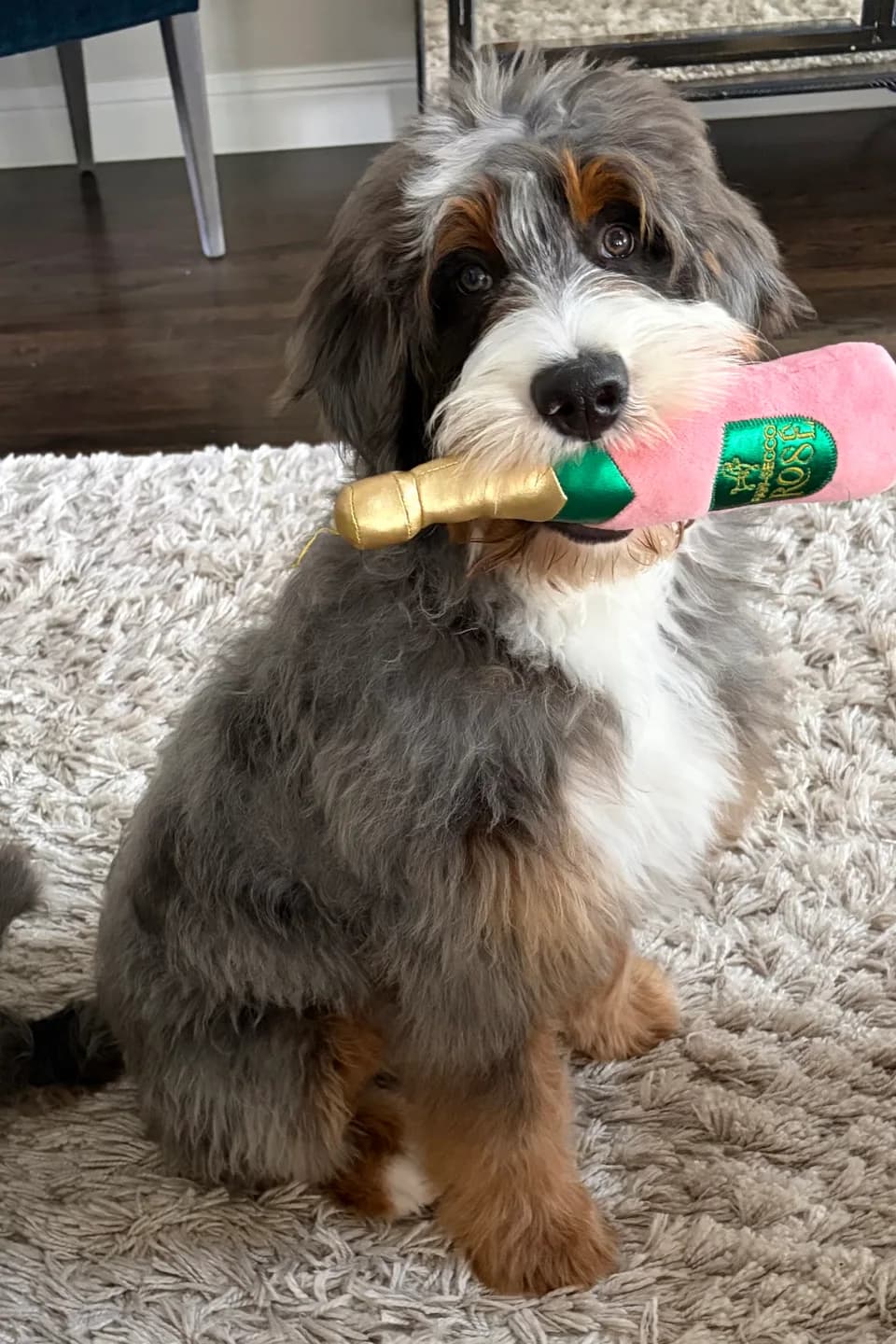
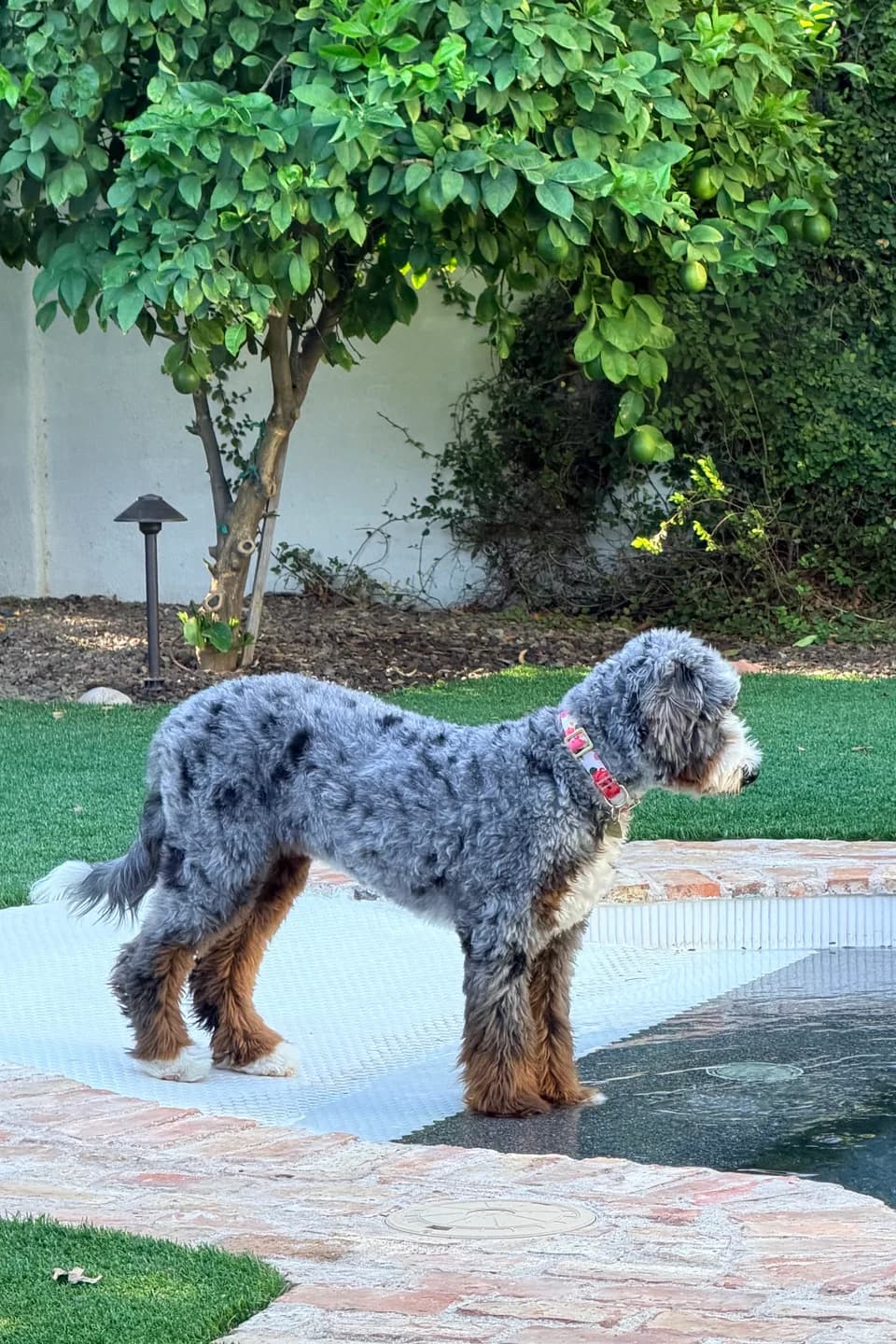
It is not hard to understand the appeal. A merle Bernedoodle is a head-turner in a breed that already turns heads. The marbled pattern, where random patches of pigment are diluted into softer blues, silvers, or lilacs against a darker base, creates a look that is completely unique to each individual dog. No two merles are alike. The combination of the Bernedoodle's plush coat texture with the merle pattern produces something genuinely striking, and for many families, that visual uniqueness is part of what drew them to the breed in the first place.
Merle Bernedoodles can come in blue merle (diluted black), chocolate merle (diluted brown), and a range of variations depending on what other color genes the dog carries. When paired with the classic Bernedoodle tri-color markings (the white chest, the rust points), the result is a dog that carries the breed's signature warmth and expression with an added layer of visual depth that solid-colored dogs simply do not have.
The Poodle Community and Merle: A Decades-Long Debate
To understand why merle in Bernedoodles generates controversy, you have to understand what happened in the Poodle world first. For decades, the established Poodle community resisted acknowledging that the merle gene existed in their breed at all. The prevailing position was that merle was not native to Poodles: that its presence in Poodle lines must mean another breed was mixed in somewhere, and that any Poodle carrying merle was therefore not a purebred.
The reality turned out to be more complicated. Yes, at some point merle was introduced into Poodle lines through an outside breed. But this is not unique to merle. Many other colors within the Poodle pedigree were also the result of intentional introductions. The deep red colors that are now celebrated in the breed came from the deliberate introduction of Irish Setters many, many decades ago. Nobody questions the legitimacy of a red Poodle today. Merle followed a similar path. It has been present in Poodle lines for a very long time, passed down through generations of dogs that were otherwise considered fully purebred by every other standard. Over the years, genetic testing has confirmed merle in dogs with deep, documented Poodle pedigrees stretching back many generations. The gene did not appear out of thin air. It was there, integrated and inherited just like every other color in the breed.
The resistance was not entirely about science. It was also about breed politics, show-ring culture, and a deep institutional reluctance to accept anything that challenged the established definition of what a Poodle should look like. For years, merle Poodles were excluded from registration, from showing, and from serious breeding conversations. Breeders who worked with merle were often marginalized or dismissed by the broader Poodle community.
That landscape has shifted significantly. As DNA testing has become more sophisticated and more widely accessible, the evidence for merle as a longstanding part of the Poodle gene pool has become difficult to deny. More registries are recognizing merle Poodles. More breeders are working with merle openly and responsibly. The conversation has moved from "does this gene belong here" to "how do we work with it safely," which is where it should have been all along.
How Merle Enters Bernedoodle Lines
In Bernedoodles, merle comes through the Poodle side of the pedigree. The Bernese Mountain Dog does not carry merle. When a Poodle carrying the merle gene is crossed with a Bernese, some of the resulting puppies may inherit the merle pattern.
Because merle is a dominant gene, only one copy is needed for the pattern to express visually. A dog with one copy of merle (Mm) will display the merle pattern. A dog with no copies (mm) will not. This is straightforward and easily confirmed with a simple DNA test.
The Double Merle Danger: This Is Non-Negotiable
The one area where there is no room for debate is double merle. When two merle dogs are bred together, there is a 25% chance of producing puppies that inherit two copies of the merle gene (MM). These double merle dogs frequently suffer from severe and permanent disabilities, including missing or underdeveloped eyes, deafness, and other serious developmental issues.
This is entirely preventable. A merle dog should only ever be bred to a non-merle partner.
What makes this particularly important is that merle can remain hidden. The merle pattern does not always show itself visually. It can be masked under red and white coat patterns, making a dog appear solid-colored when it actually carries the merle gene. A breeder who knows their pedigrees and understands which lines carry merle can make informed pairing decisions. Knowing the merle status in the parents and throughout the pedigree is essential to avoiding a merle-to-merle pairing, especially when the gene may not be visible to the eye.
The BKC Position on Merle
The Bernedoodle Kennel Club's position is clear: as long as the breeds represented in a Bernedoodle's pedigree are Bernese Mountain Dog and Poodle, with no significant unknown outside breeds, the patterns and color variations that make up purebred Poodle lines are part of the Bernedoodle breed. Merle is one of those patterns.
The merle gene is deeply and broadly integrated into the Poodle gene pool. It has been there for generations. Excluding it from the Bernedoodle standard would mean ignoring a well-documented part of the Poodle's own genetic history, and it would be removing much needed genetic diversity in the Poodle pedigree.
We recognize that some Bernedoodle programs include other known breeds: Australian Bernedoodles incorporate Australian Shepherd, and Munchkin Bernedoodles include Cavalier King Charles Spaniel. These are acknowledged openly, and the outside breeds are part of the documented pedigree. Transparency is what matters. What BKC does not accept is undisclosed mixing or unverifiable pedigrees presented as purebred Poodle lines.
Merle is beautiful. Merle is legitimate. And merle must be bred responsibly. Those three things are not in conflict. The standard for merle breeding is the same standard we hold for every other aspect of the breed: test, document, and make informed decisions that prioritize health and transparency above all else.
What to Ask Your Breeder About Merle
If you are considering a merle Bernedoodle, the questions you should ask are straightforward. Is this a merle-to-non-merle pairing? Where does the merle gene come from in the Poodle side of the pedigree? Are the same health testing and temperament standards applied to merle litters as to every other litter in the program?
A breeder who prioritizes color over health is not a breeder you want to buy from, regardless of how stunning the puppy looks. The best merle Bernedoodles come from programs where color is a welcome outcome of good genetics, not the primary goal of the pairing. Health, temperament, and structure come first. Always.
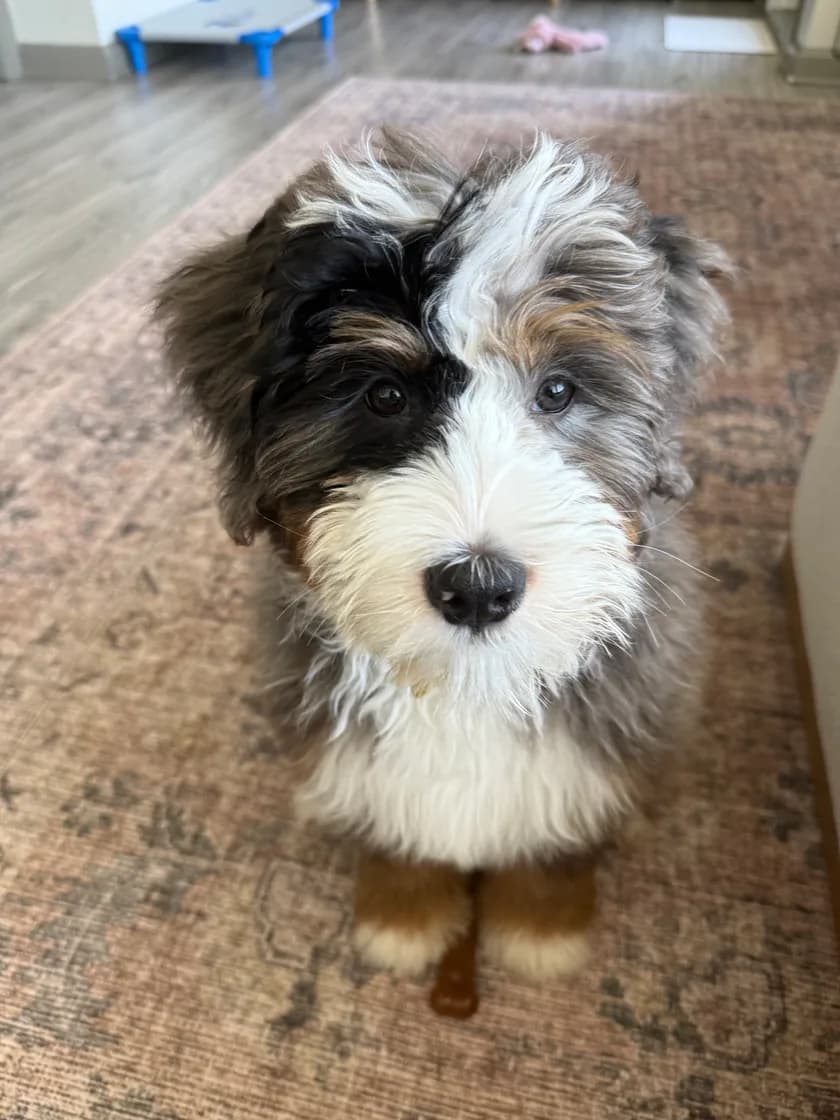
Merle is a recognized pattern within the Bernedoodle Kennel Club. It is bred responsibly (merle to non-merle only, DNA confirmed) and held to the same health, temperament, and structural standards as every other Bernedoodle in the registry. Color is a welcome outcome of good genetics. It is never the goal of a pairing.