Why Are Bernedoodles So Popular?
The real reasons behind the breed's rise: temperament, health, and a coat that finally works
What Is a Bernedoodle?
A Bernedoodle is a cross between a Bernese Mountain Dog and a Poodle, bred specifically to combine the Berner's family-centered temperament with the Poodle's low-shedding coat and longer lifespan. Bernedoodles are a designer breed, also called a hybrid or doodle cross. They come in six standard sizes: Micro Mini, Petite Mini, Mini, Medium, Standard, and Standard XL. The Munchkin is a separate type rather than a size class.
Munchkin Bernedoodles include Cavalier King Charles Spaniel in the mix to create a well-rounded temperament and a rounder, softer face structure at a smaller size, usually 10 to 25 pounds.
Why Are Bernedoodles So Emotionally Intuitive?
Ask anyone who has one. The first thing they'll tell you is that their Bernedoodle knows. It clocks a bad day before anyone says anything. It presses against the person in the room who's quietly crying before the rest of the family has even noticed. When you're anxious, it settles hard at your feet. When you're happy, it gets goofy.
The Bernese Mountain Dog is one of the most emotionally tuned-in working breeds ever developed, bred for centuries to live inside farm families in the Swiss Alps and keep track of the mood of the house, while also serving as a stable, gentle, and strong workhorse on the farm. The Poodle brings a lot of raw intelligence and the cognitive ability to act on what it's picking up, along with better agility and athleticism. Poodles are also far less prone to obesity than Bernese, so the cross tends to settle at a healthier midpoint in weight and build. Put the two together and you get a dog that isn't just sweet. It's perceptive. It responds to emotion in a way very few breeds do.
For families dealing with anxiety, neurodivergence, grief, or just the ordinary weight of modern life, that's not a nice-to-have. It's a big part of the reason they chose this dog in the first place.
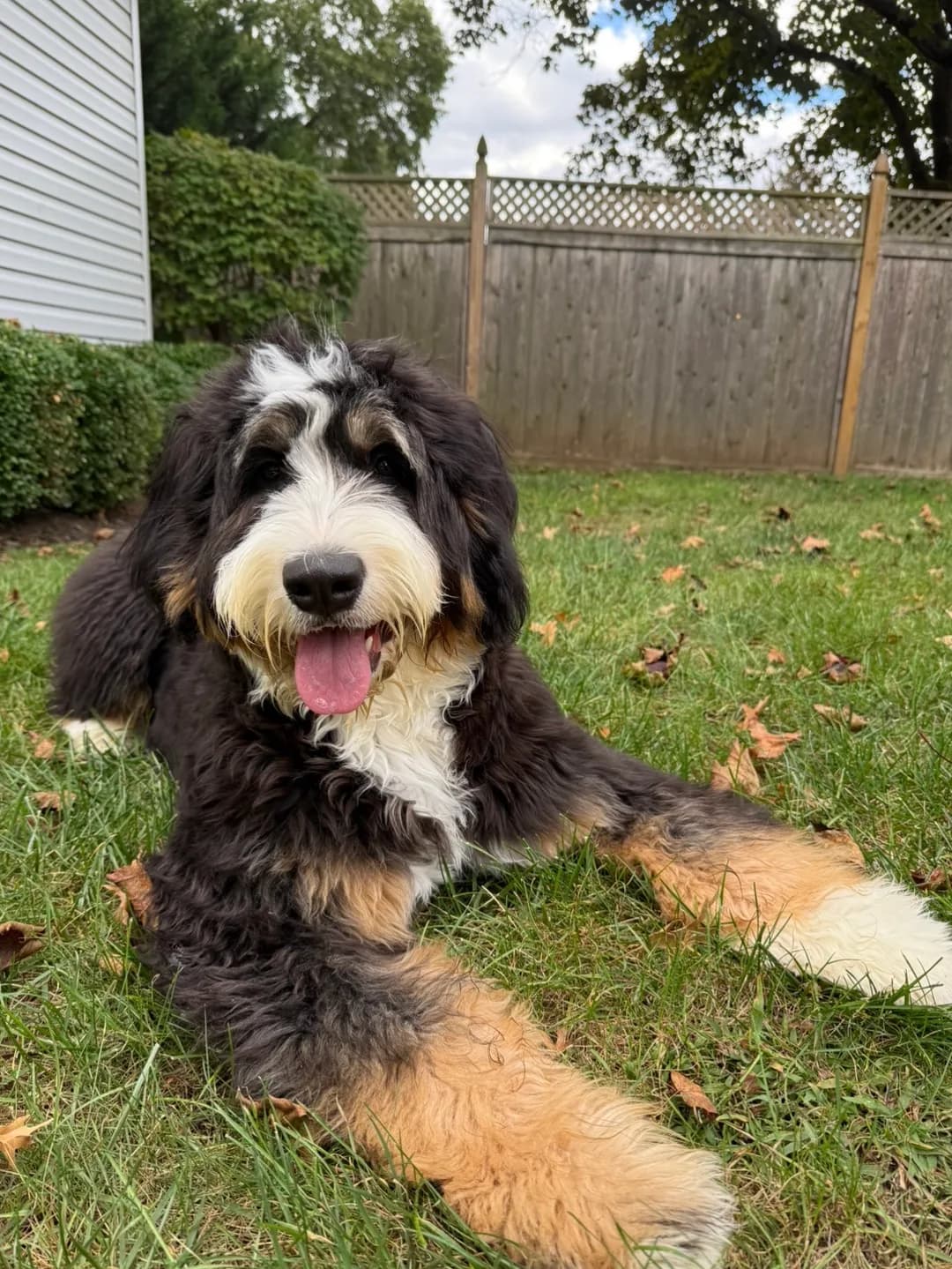
Are Bernedoodles Healthier Than Their Purebred Parents?
Yes, generally. The Bernese Mountain Dog is a large breed, and with that comes a shorter lifespan and a greater tendency toward weight issues, driven largely by a historically small gene pool. At the turn of the 19th century in Europe, the breed was at real risk of going extinct, and it was only the dedicated work of a small community of Berner lovers that preserved the dogs and formally established them as a recognized breed. That rescue worked, but it left Berners without much true genetic diversity, which exposed the line to the health problems that tend to come with a narrow bloodline.
Almost exactly a hundred years later, an equally dedicated group of Berner lovers has made it their life's work to improve the lifespan and quality of life for these dogs. The Bernedoodle is one of the most successful outcomes of that effort.
Well-bred Bernedoodles are living longer, with fewer health issues and lower cancer rates than their Bernese counterparts, and they have a much lower rehoming rate, in large part because of the careful engineering of their coat (traditionally a heavy-shedding fur) into a low-shed, hypoallergenic "hair" type that works for modern households.
Crossing a Berner with a Poodle reopens the gene pool. The biology has a name: heterosis, or hybrid vigor. When two genetically distinct breeds produce offspring, recessive disease alleles rarely line up, so crossed dogs statistically carry fewer expressed defects. With full health testing on both parents, a thoughtfully bred Bernedoodle keeps the Berner's temperament and looks but comes with much better odds of a long, healthy life, typically 10 to 16 years.
Why Do Bernedoodles Have Softer, Wavier Coats Than Poodles?
Poodles have been the go-to allergy-friendly dog for almost a century, but anyone who's actually lived with one knows the catch. That dense, tightly curled coat is a full-time job. Miss a week of brushing and it mats. Skip the groomer and things spiral. And honestly, it doesn't feel the way most people want a dog to feel. It's wiry and springy. More sheep than teddy bear.
Intentionally bred Bernedoodles solve this through a combination of genetic testing and multigenerational selective breeding for the ideal hair genetics. The goal is to pair the Bernese side's soft, loose wave and silky texture with the Poodle's "hair" genes, the ones that produce a low-shed or non-shedding coat, and then breed across generations until both sets of traits come through together reliably. The result is a coat that carries the soft, loose wave and plush feel from the Bernese side and the minimal, non-shedding coat turnover from the Poodle side. Easier to brush. Less prone to tangling. And because the Berner is a heavier, chunkier dog, the cross also inherits a fuller, plusher silhouette a Poodle can't give you on its own.
Are Bernedoodles Good With Kids?
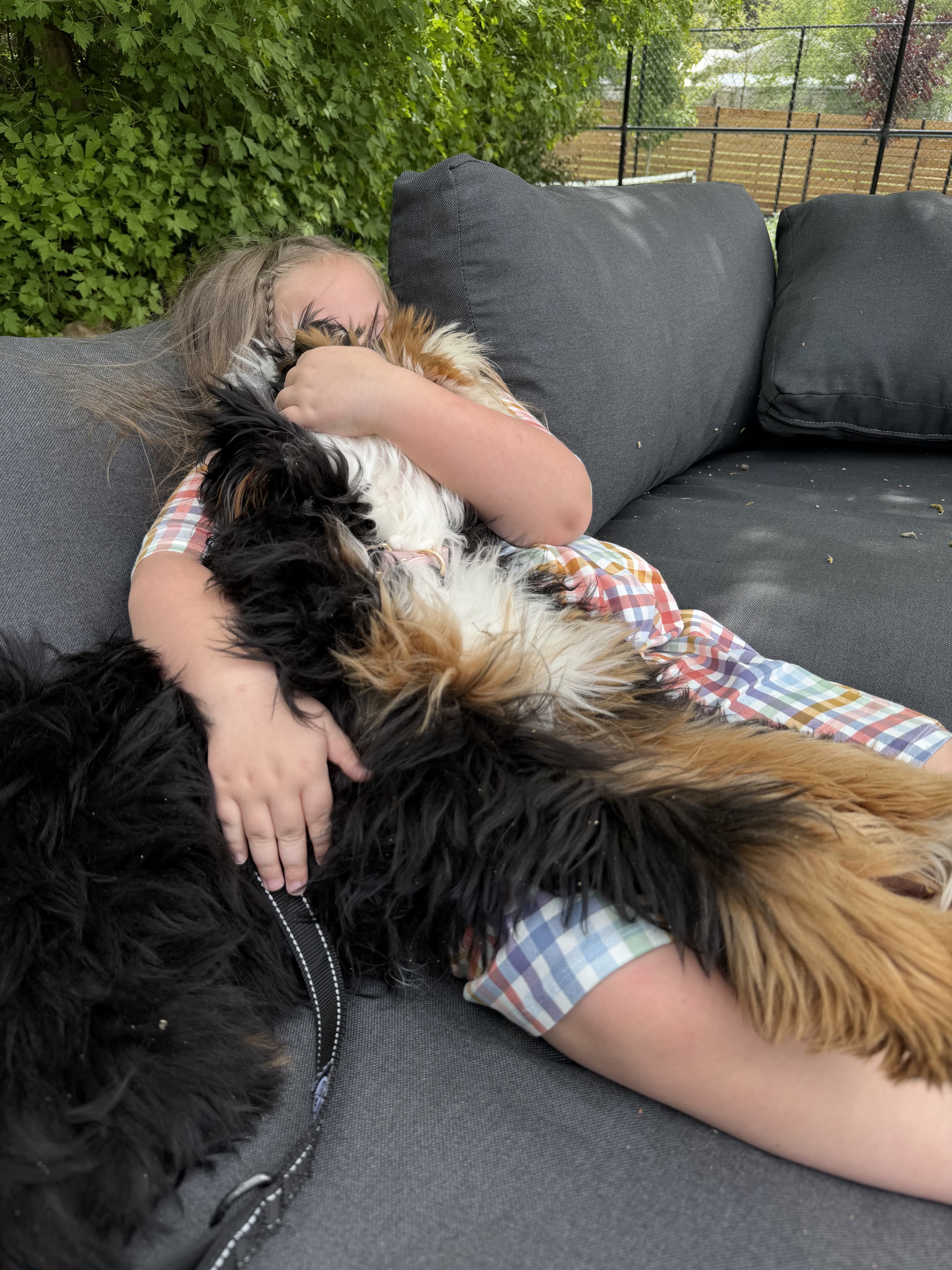
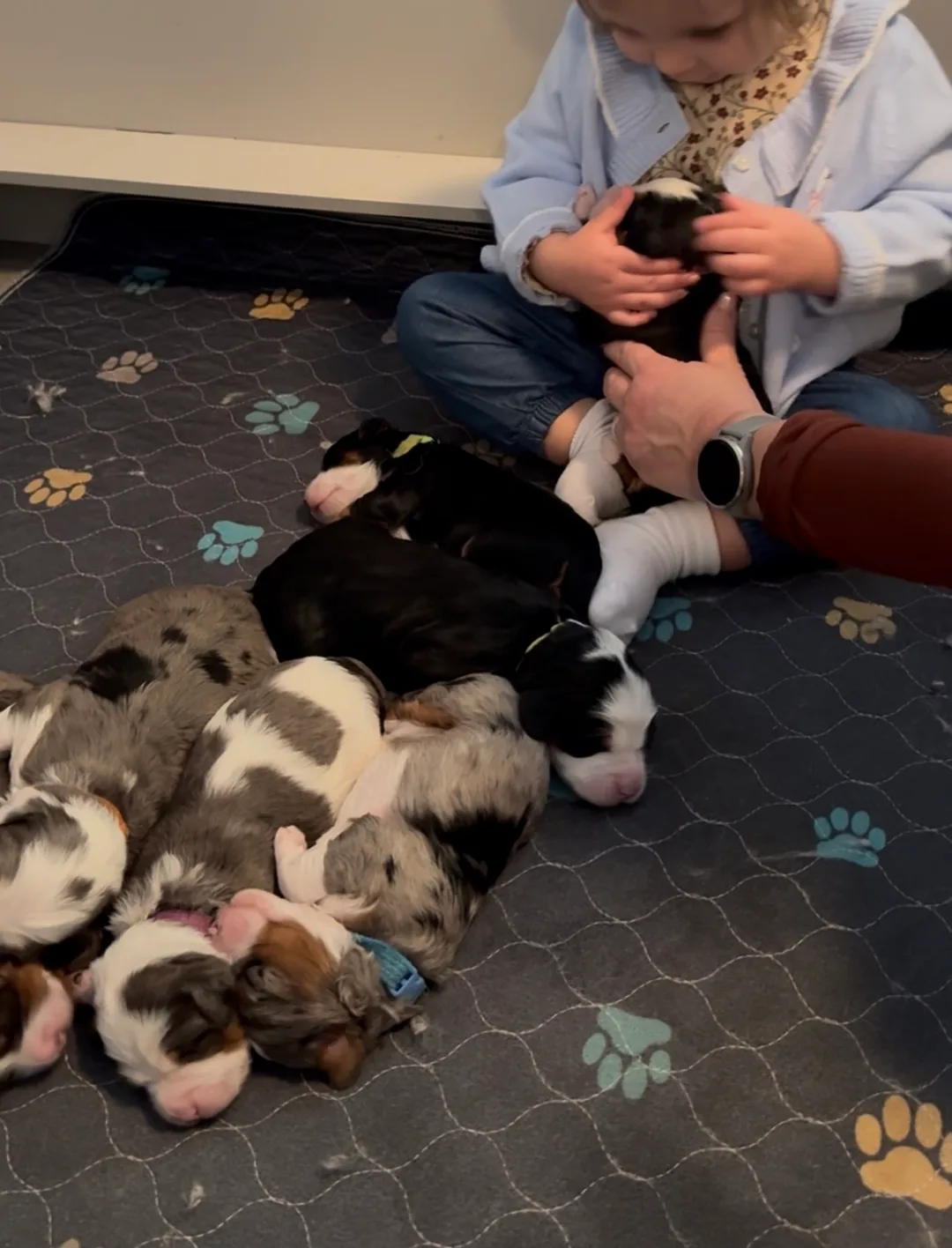
Yes, exceptionally so. The Berner side of the cross was bred for centuries to live inside farm families with kids climbing all over them, and Bernedoodles inherit that patience almost completely intact. They don't flinch at toddler affection. They lean into it. This is one of the most physically affectionate breeds you'll ever meet. They want to be hugged, sat on, leaned against, cuddled on the couch while a kid reads to them. For families with young children, that combination of tolerance and enthusiasm is rare, and it's a big part of why so many families with kids under ten end up picking this breed.
Are Bernedoodles Good for Apartments and City Living?
Yes, because they come in a real range of sizes. Micro Minis run under 20 pounds and Petite Minis about 20 to 30. Munchkins, a type rather than a size class, are usually 10 to 25 pounds. Mini is 30 to 50. Medium is 40 to 60. Standard is 60 to 90, and Standard XL is 90 and up. That range exists because breeders cross in different sizes of Poodle and carry those size genetics forward across generations. A studio in the city comfortably fits a Micro Mini, Petite Mini or Munchkin. A family townhouse handles a Mini or Medium. A house with a yard gets the full Standard or Standard XL. Same temperament, same coat behavior, very different footprint. You pick the size that fits your space, not the other way around.
Are Bernedoodles Friendly With Other Dogs?
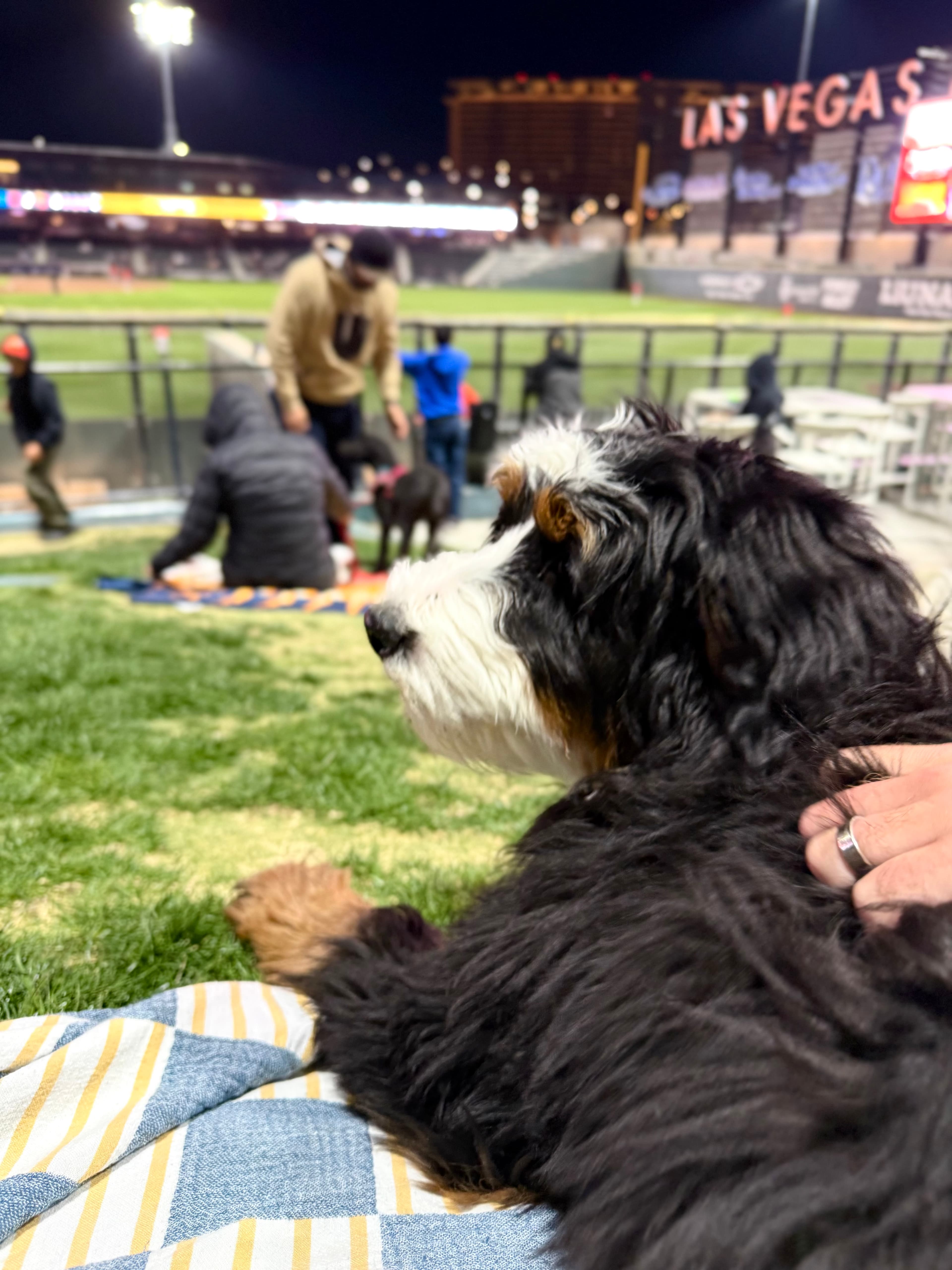
Yes. Bernedoodles tend to greet other dogs the way they greet people, like they're meeting a friend. The Berner's gentle, non-reactive disposition combined with the Poodle's social confidence gives you a dog that isn't intimidated, isn't aggressive, and isn't anxious at the dog park or walking past unfamiliar dogs on a leash. For city owners who cross paths with dozens of other dogs a day on sidewalks and in elevators, that easy social baseline makes an enormous difference in daily life.
What Is an Ultra Bernedoodle?
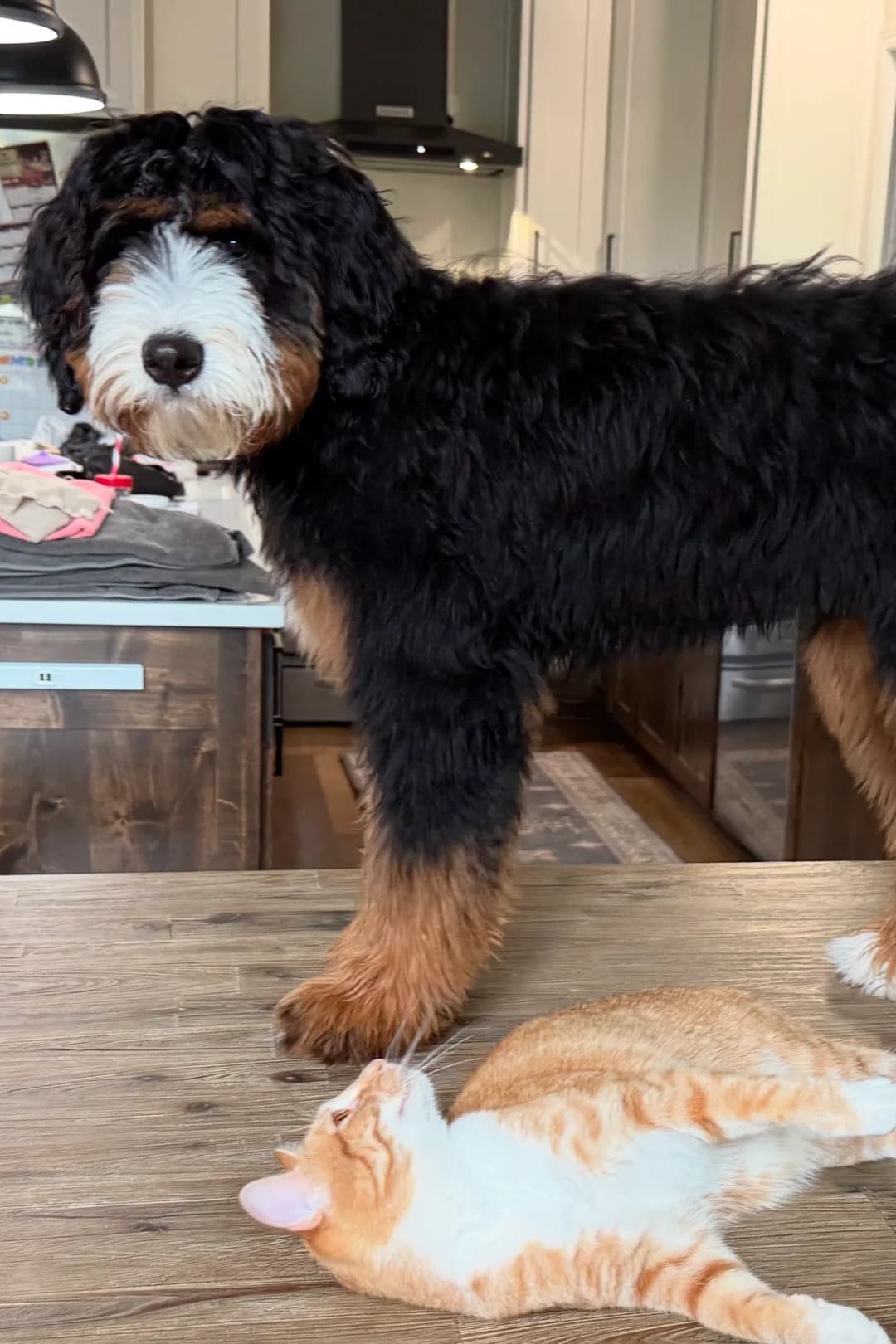
An Ultra Bernedoodle is a carefully engineered Bernedoodle with a significantly higher percentage of Bernese Mountain Dog than Poodle, sometimes reaching 80% or higher Bernese, while still carrying the low-shedding coat genetics from the Poodle side. Ultras look and behave more like a traditional Bernese, with the thicker build, calmer temperament, and signature tricolor coat, but without the heavy-shedding fur and shorter lifespan that make owning a purebred Berner so hard.
Ultra Bernedoodles were first developed in late 2019 by Emily Scott at Rocky Road Doodles, and in collaboration with Kishan Kikkeri at Namaste Bernedoodles, the concept quickly spread across the entire doodle world. Ultra Labradoodles, Ultra Goldendoodles, and Ultra Cavapoos have all followed the same concept. The shared insight was simple but important: you don't have to give up the purebred parent's personality and structure to get the low-shedding coat most modern families need. Done right, Ultras are the emerging standard for families who love the Bernese look and temperament but need a dog that fits indoor, modern life.
Gone are the days when dogs lived in the backyard, where it didn't really matter if they shed because most of their fur stayed outside. Today our dogs sleep in our bedrooms, travel in our cars, and even fly with us on vacation, which makes the coat type a much bigger decision than it used to be.
What Is a Munchkin Bernedoodle?
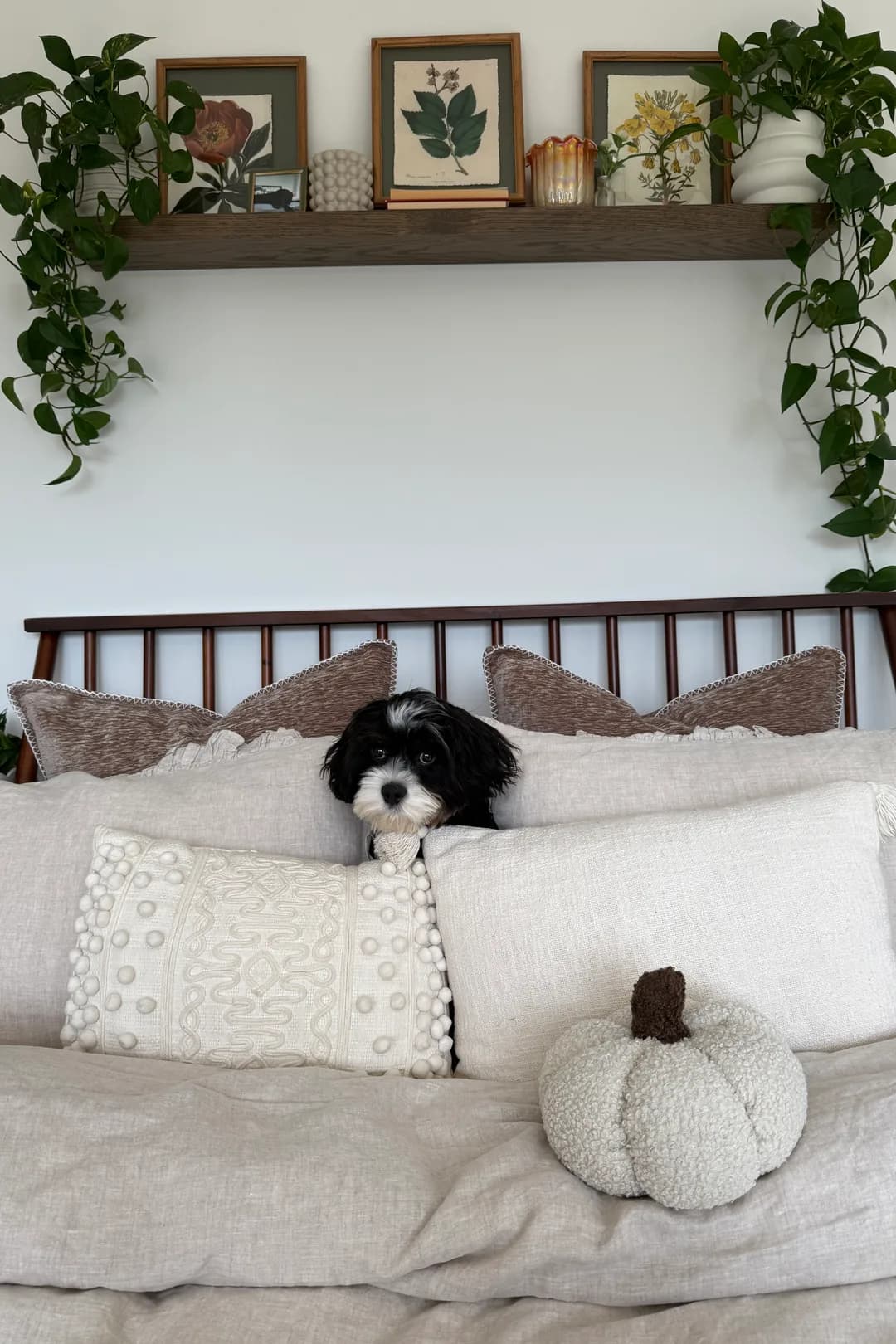
Munchkin Bernedoodles follow a similar logic on the opposite end of the size scale. They're the answer to the question: "Can I have a tiny Bernedoodle without losing the Bernese personality and look?" By introducing Cavalier King Charles Spaniel into the mix, breeders can shrink the footprint while keeping a round, soft face and a warm, family-oriented temperament intact.
The Short Answer
Bernedoodles are popular because they manage to do a lot of things at once without really compromising on any of them, and in the dog world that's unusual. They feel like a member of the family instead of just a pet in the house. They come with a real shot at a long life, which is more than you can say for the Berner on its own. Their coat finally solves the Poodle problem. They're patient with kids, they scale to whatever size home you have, and they're easy with other dogs at the park.
Buy from a breeder who's doing the work, meaning full health testing, generation planning, and early socialization, and you'll end up with one of the best-designed family companions you can get right now.
How do you care for the health of both parents? Are there any known health issues in either line? Why did you choose to breed Bernedoodles specifically? What generation is this litter, and what does that mean for coat and temperament? How many generations back have you been breeding these lines?
Related Articles
Explore more from our knowledge base