Do Bernedoodles Shed?
The Furnishings Gene Explained, and Why It's the Only Thing That Matters
The RSPO2 Furnishings Gene
Shedding in Bernedoodles is controlled by one gene: RSPO2, commonly called the furnishings gene. This gene determines whether a dog develops the longer facial hair (the beard, eyebrows, and mustache) associated with low-shedding breeds. More importantly, it controls the hair growth cycle that determines how much a dog sheds.
Every dog carries two copies of this gene. The results are straightforward: FF (two furnishing copies) produces the lowest shedding, comparable to a purebred Poodle. Ff (one copy) produces low shedding with slightly more hair turnover. ff (no copies) means the dog will shed like a purebred Bernese Mountain Dog, regardless of how much Poodle is in the mix.
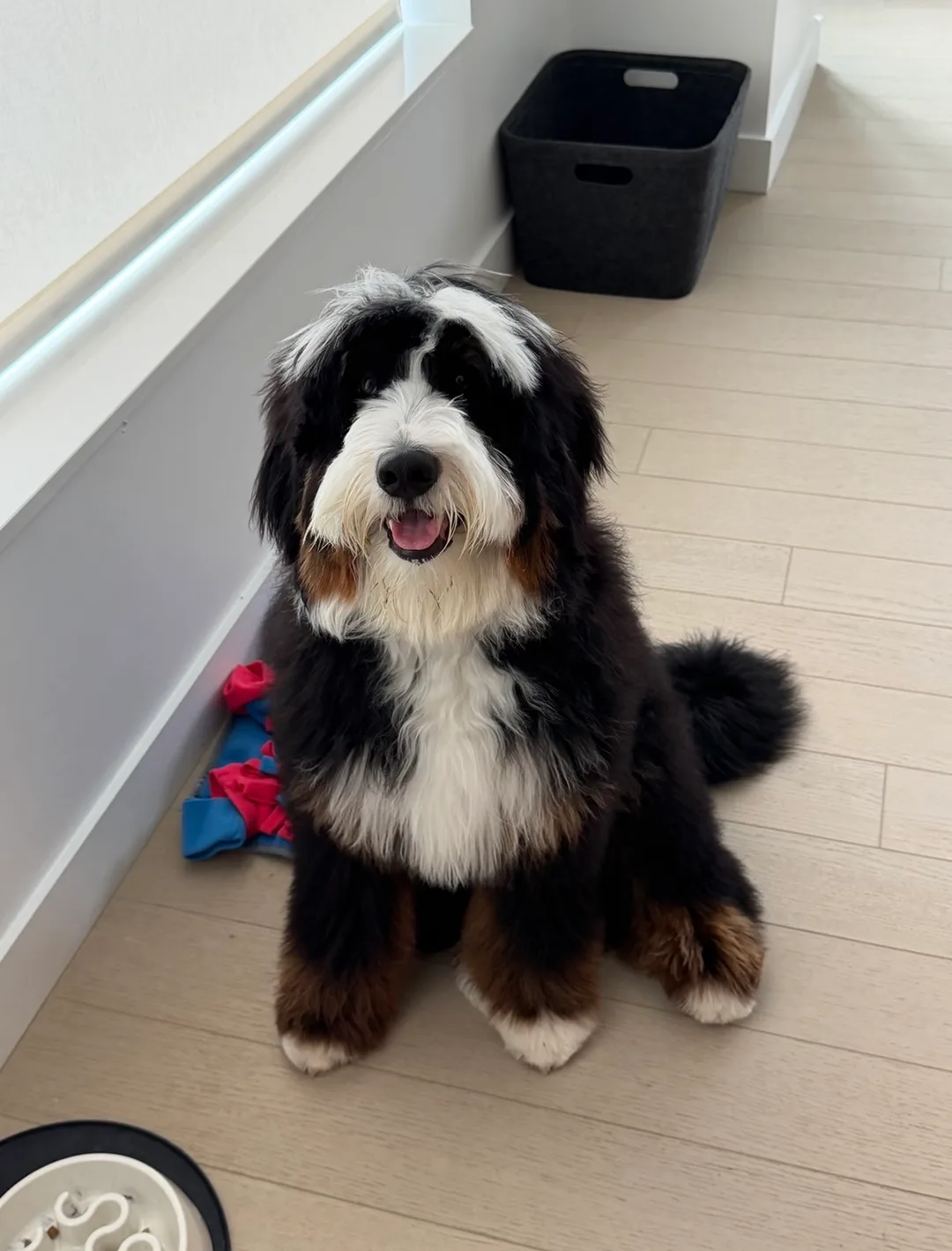
What Does Not Determine Shedding
Generation does not determine shedding. A multigenerational Bernedoodle with FF furnishings will shed less than an F1b (75% Poodle) with Ff furnishings. The math of breed percentages is irrelevant once you know the furnishings genotype.
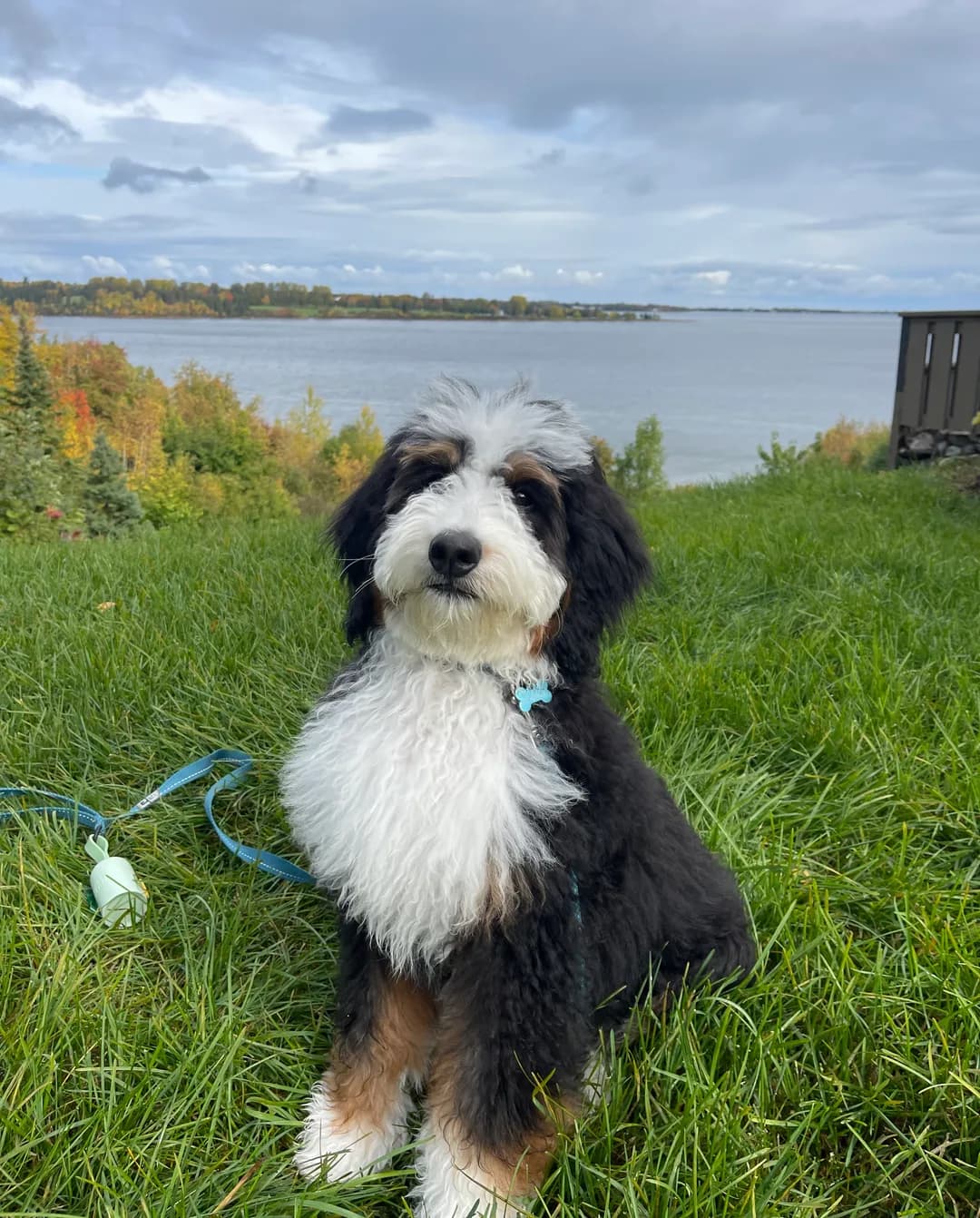
Coat type does not determine shedding. This is one of the most persistent misconceptions in the doodle world. A straight-coated Bernedoodle with FF furnishings will shed just as little as a curly-coated one. Curl and shedding are controlled by completely separate genes: KRT71 for curl, RSPO2 for shedding. They do not correlate.
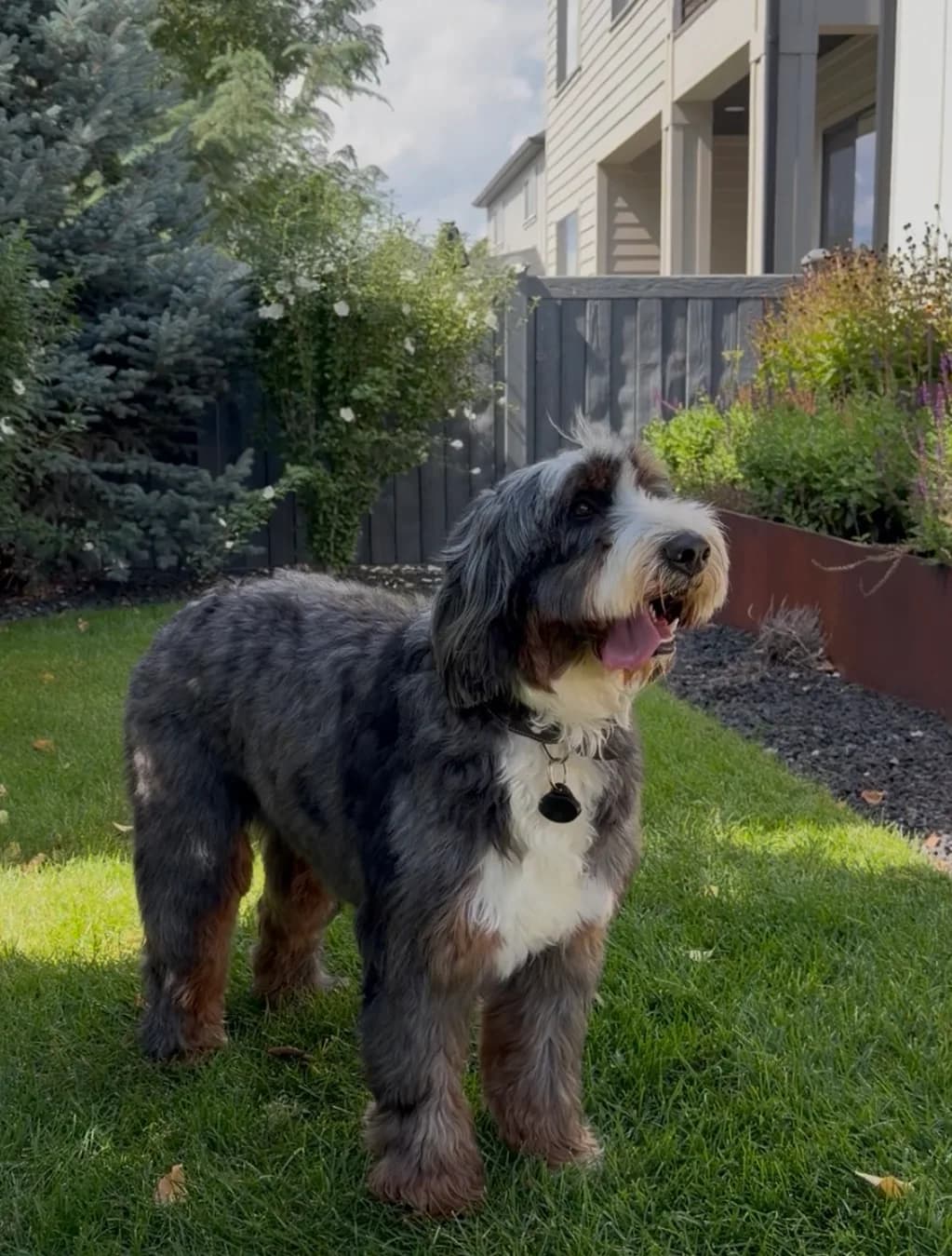
Color does not determine shedding. A tri-color, phantom, merle, or solid Bernedoodle all shed according to their furnishings genotype, not their coat color or pattern.
How to Know Before You Buy
Ask your breeder what the coat types of both parents are and what furnishings status they carry. A knowledgeable breeder will know whether each parent is FF, Ff, or ff, and can tell you what to expect from the litter based on that pairing. They should also be able to share what they know about the individual puppies, whether through DNA testing of the parents, observation of coat development, or both.
If both parents are FF, every puppy in the litter will be FF. If one parent is FF and the other is Ff, all puppies will carry at least one copy (FF or Ff). If one parent is Ff and the other is Ff, there is a 25% chance of an ff puppy in the litter. Responsible breeders plan pairings to ensure at least one parent carries two copies. A breeder who cannot answer these questions confidently may not have the genetic understanding you want behind your puppy.
What is the furnishings genotype (FF, Ff, or ff) of both parents? Do you DNA test each puppy individually for furnishings? If one parent is Ff, what steps do you take to ensure puppies carry at least one copy?
Related Articles
Explore more from our knowledge base